


How many of us believe that everyone shouldn’t get a trophy in youth sports?
Now let me ask a better question.
How many of us have simply co-signed that belief without ever giving it real, thoughtful consideration?
A post about Norway’s approach to youth sports went viral recently — particularly how few kids quit compared to the ultra-competitive American model. It struck a nerve. Maybe because it forced us to ask whether we’ve confused early competition with long-term development.
I’ve been thinking about it a lot.
I’m the head coach of my five-year-old’s basketball team. I’ve coached our 10-year-old in flag football for years now. Every weekend, I watch them compete. I watch their peers compete. I quietly listen to parents talk about travel schedules, private lessons, money, pressure, opportunity.
And I keep wondering:
What are we optimizing for?
So I started asking parents what they truly believe about youth sports — not the surface answer, but the deeper one.
The first answer is almost always the same:
“I don’t believe in participation trophies.”
But when I ask, “Have you really thought through why?”
Most pause.
This past weekend I spent time with Jared Blank, the chief of staff for the Texas Longhorn football program. By day he helps run one of the most visible brands in college football. By night, he’s one of the most thoughtful leaders I know when it comes to athletes with learning challenges.
Jared navigates dyslexia daily. A few years ago, he ran the World Marathon Challenge — 7 marathons in 7 days on 7 continents — to bring attention to kids who struggle the way he once did. He has three post-graduate degrees and is currently pursuing his doctorate at Texas.
I asked him about “participation trophies.”
He paused and said,
“What about participation feedback?”
He nailed it.
Instead of a trophy for being on the team what if we front loaded the concept of teaching each athlete where they have excelled, offer a 3 to 1 ratio of support and challenge, and give them an off-season goal?
So let me offer those who are wrestling with that question an option:
If I told you that 70% of kids would stay in sports all the way through high school — and in that journey they would develop confidence, teamwork, resilience, integrity, leadership, and the ability to handle adversity…but it required us to rethink how we give feedback at ages 8–13 would you take that deal?
Because here’s the reality:
In America, where we mock participation trophies and pride ourselves on being ultra-competitive, 70% of kids quit by age 13.
They never get close to embodying those traits.
They never experience the long arc of development.
They never get the reps that build resilience.
At what cost are we chasing “competitive?”
Is this about who America is?
Is this about the cutthroat ladder to college football, basketball, pro sports?
Or are we just out of touch?
I watch youth sports every weekend.
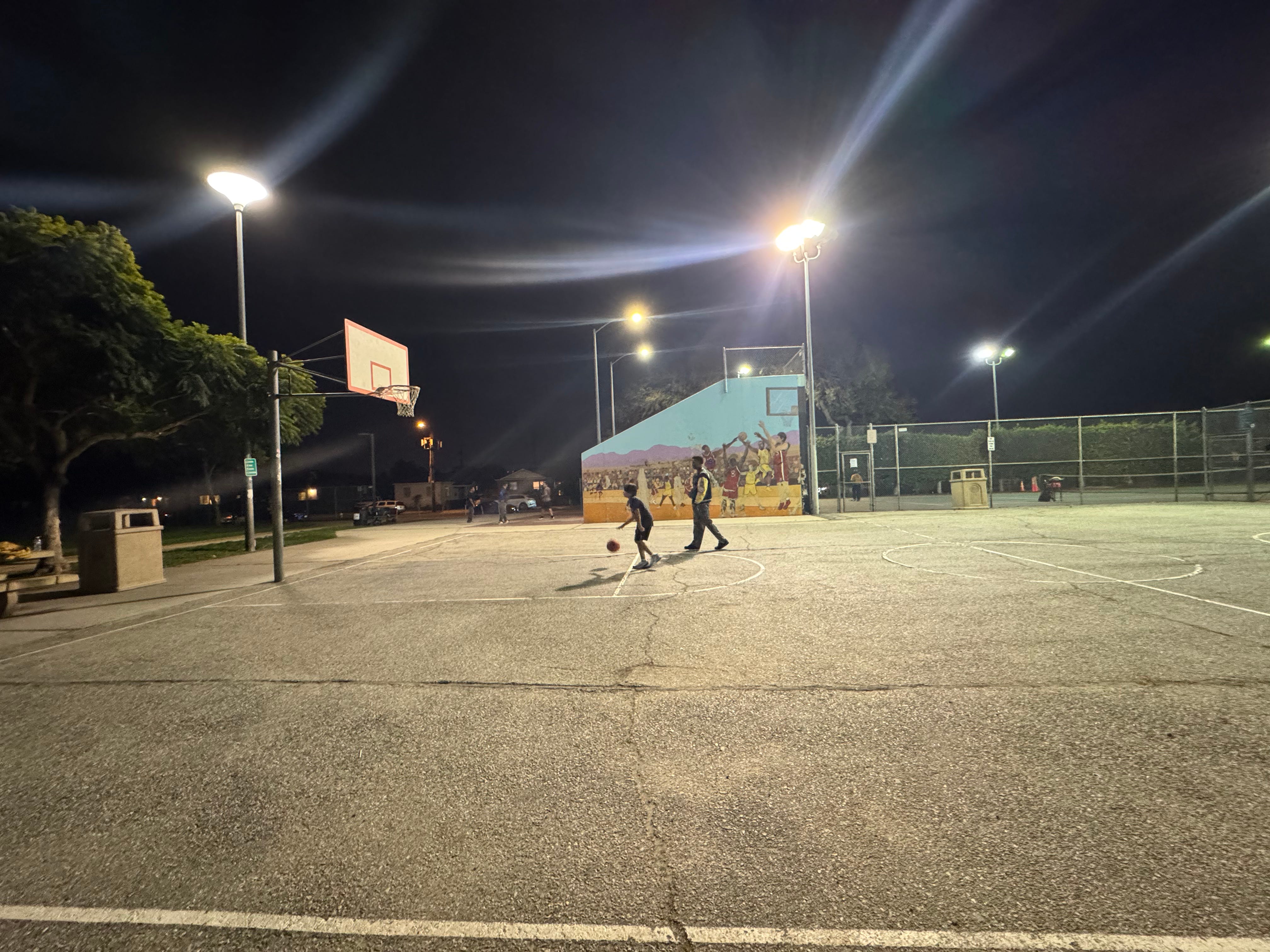
And with relative certainty, I can tell you this: I can’t find one Division I prospect in second grade. Or third. Or fourth. Or fifth. I haven’t seen one in junior high either.
Sports are developmental.
Life is developmental.
I co-wrote a book called Five-Star QB. Out of the 138 quarterbacks ever rated five stars, only one has won a Super Bowl: Matthew Stafford — in Year 13, on his second NFL team.
Most elite athletes never live up to the expectations placed on them.
And those are the rare ones who actually make it to big-time college programs.
So what are we doing at age nine?
Development is nonlinear.
Potential is rarely visible at age 10.
And yet, we structure youth sports as if evaluation is the primary objective.
Don’t you think it’s time we hit reset in youth sports?
If over half of kids are going to quit…
If we’re investing thousands of dollars…
If pressure is rising and joy is declining…
In what world is that a successful model?
Maybe the real question isn’t about trophies at all.
Maybe it’s about what kind of feedback environment keeps a child in the game long enough to actually grow.
I think the bubble is close to bursting.
And I think if parents paused — really paused — and asked:
What do I want my child to become through sports?
Not earn.
Not win.
Not achieve.
But become.
We might rebuild the entire system overnight.
Curious your thoughts.
Let’s have a real conversation about the state of youth sports in the comments below or on social media.
Much love and stay steady,
Yogi
"The kids play while the parents compete" was an email I received after sharing this...pretty spot on.